Marketable vs. Insurable Title in Commercial Real Estate: What's the Difference?

In the world of real estate, the terms “marketable title” and “insurable title” represent two distinct legal standards used for evaluating property ownership. A property can easily qualify for an insurable title even if its records still contain defects or unresolved issues, provided a title insurance company is willing to take on that risk and issue a policy. On the other hand, a marketable title is a much higher legal bar, and is only used if the property's title is entirely free from plausible doubt, defects, or reasonable buyer objections. Understanding this distinction is important, especially for commercial transactions, because they generally involve larger investments, more complex ownership histories, and greater legal and financial exposure than most residential deals.
Table of Contents
- Marketable vs. Insurable Title in Commercial Real Estate: What's the Difference?
- What Is a Marketable Title?
- What Is an Insurable Title?
- What's the Difference Between Marketable Title and Insurable Title?
- Why the Difference Matters in Commercial Real Estate
- Common Situations Where Title Is Insurable but Not Marketable
- How Buyers and Lenders Evaluate Title Risk
- How Title Insurance Plays a Role
- How to Resolve Title Issues to Make Title Marketable
- Frequently Asked Questions About Marketable vs Insurable Title
What Is a Marketable Title?

A marketable title is a property title that is entirely free from any legal defects, ownership disputes, or unresolved claims that would cause a reasonable buyer to question the validity of the property's ownership. In simple terms, this means that the buyer can accept the property without worrying that another party may later challenge their ownership rights.
For a title to be legally considered marketable, it must meet several strict conditions, including:
- There must be no active liens, unresolved claims, or active ownership disputes recorded against the property
- The property's ownership history must be completely and properly documented from one owner to the next
- There must be no legal uncertainty that would make a reasonable buyer or investor hesitate to proceed with the transaction
- The title that can be transferred cleanly without requiring unusual legal protections, indemnity agreements, or contractual concessions
Marketable titles are the baseline expectation for most standard real estate purchase and sale agreements, unless the contract explicitly specifies a different title standard.
What Is an Insurable Title?

An insurable title is a title that a title insurance company is willing to insure. This does not necessarily mean the title is completely clean or free from defects. It simply means that the insurer has reviewed public records, identified and assessed the risks associated with the property, and decided that those risks are minimal enough to cover under a title insurance policy.
Because of this, insurable titles usually still have minor defects, known encumbrances, or unresolved historical issues, such as a technical error in a deed, an ancient easement, or an old lien that appears satisfied but was never formally released. While these issues technically cloud the title, they are typically still considered insurable. This is the key distinction when it comes to marketable vs insurable titles. An insurable title focuses on whether known risks can be insured, while a marketable title focuses on whether ownership is clean enough for a reasonable buyer to accept without hesitation.
Insurable titles are the standard for most financed real estate purchases. Mortgage lenders need to know that their financial investment is protected, and title insurance guarantees this, even if the title is not fully clean. As long as a reputable insurer will issue a policy covering the lender's position, the financing and closing can safely proceed.
What's the Difference Between Marketable Title and Insurable Title?

The difference between a marketable title and an insurance title largely comes down to risk, requirements, and perspective. Here's a quick look at some key distinctions between them:
|
Aspect
|
Marketable Title
|
Insurable Title
|
|---|---|---|
|
Risk Level
|
Must be substantially free of defects and legal uncertainty, allowing a buyer to take ownership without fear of future title disputes or financial claims | May still contain known issues, but a title insurer has decided that those issues are manageable enough to absorb and protect against |
|
Treatment of Title Defects
|
All known defects and clouds must be completely resolved, cleared, or cured before ownership changes hands | Defects still exist on the public record, but they are explicitly covered or “insured over” by the title policy |
|
Closing Requirements
|
Most buyers typically require the seller to provide a marketable title at closing | Mortgage lenders generally only require an insurable title because their financial interest is fully protected by the policy itself |
|
Buyer vs. Insurer Perspective
|
Focuses on the buyer's mindset (“Is this property free from legal headaches, allowing me to resell it later without objection?”) | Focuses on the insurer's mindset (“Are the risks acceptable enough for us to safely insure against in exchange for a premium?”) |
|
Impact on Transactions
|
Allows the deal to progress smoothly under standard contract terms | Generally qualifies for lender financing and can legally close, but the buyer still retains the contractual right to object to the defects, demand corrective action, renegotiate pricing, or walk away from the deal entirely |
|
Future Transferability
|
The property can be cleanly sold to a future buyer down the line without any inherent title objections | A future buyer or a different title company may look at the same unresolved issue years down the road and refuse to accept it, requiring it to be cleared then |
Why the Difference Matters in Commercial Real Estate
When comparing marketable vs insurable titles, the distinction carries more weight in commercial transactions than in residential transactions for several key reasons:
- Higher Stakes and Larger Financial Exposure: Commercial transactions usually involve millions of dollars tied up in financing, tenant lease obligations, development rights, and future investment plans. Given the scale of the investment, a minor title issue that might be overlooked or accepted in a residential sale can create significant legal and financial liability in a commercial deal.
- Complex Ownership Histories: Commercial properties typically have complicated ownership structures and complex histories. This often involves shifting partnership interests, fractional ownership across LLCs and corporations, complex reciprocal easement agreements, ground leases, development agreements, and multi-phase property assemblages, all of which increase the likelihood of title defects or unresolved issues.
- Greater Negotiation Flexibility: Commercial buyers and sellers often have more negotiating flexibility around title standards and typically do so directly in the purchase and sale agreement. Some buyers may insist on a fully marketable title, while others may knowingly accept an insurable title in exchange for price concessions or indemnification agreements from the seller.
- Varying Risk Tolerances: Risk appetites vary widely among commercial buyers. An institutional investor acquiring a stabilized office tower will typically require a fully marketable title with minimal exceptions, while an opportunistic developer purchasing a distressed asset may willingly accept an insurable title if the pricing reflects the risk and redevelopment potential.
Common Situations Where Title Is Insurable but Not Marketable

To help make the marketable title vs insurable title distinction easier to understand, let's look at a few practical examples of situations where a title company will willingly insure a property even though the title does not meet the strict marketable standard:
- Minor Defects or Record Errors: An old deed contains a slight inconsistency in the legal property description or a minor variation in an owner's name across historical records. A title company may still insure the property because the defect poses little to no practical risk, but a buyer could reasonably argue that the title is not fully marketable because the inconsistency creates a lingering cloud on the record.
- Unresolved Easements: An easement benefiting a neighboring property was never properly recorded or disclosed in past transfers. After evaluating the property, the insurer may decide the issue is low risk and agree to either cover or exclude it from the policy. However, a buyer could reasonably object to the easement as a defect in marketability because it affects their control over how the property can be used.
- Boundary or Encroachment Issues: Minor encroachments (like a fence or driveway that extends a few feet onto the property) or contested boundary lines may not prevent an insurance policy from being issued, especially if no dispute currently exists. In many cases, the insurer may add a survey exception or exclude coverage for these boundary issues. But the unresolved boundary uncertainty still keeps the title from being considered fully marketable.
- Old Liens or Historical Ownership Gaps: A decades-old mortgage appears to have been paid off, but the lender went out of business and never recorded a formal release document. Likewise, there might be a historical gap in the chain of title where a deed was lost and no copies exist with the recorder's office. In these scenarios, a title insurer often still issues a policy after evaluating the risk, but the defect remains a technical cloud on marketability until formally cleared.
How Buyers and Lenders Evaluate Title Risk
Buyers and lenders involved in commercial real estate transactions often approach title risk differently because their underlying priorities are not the same:
- Buyers generally want a marketable title. Commercial buyers focus on long-term ownership, future resale value, refinancing potential, and operational certainty. They do not want to inherit defects that can create future legal or financial complications. A defect that a title underwriter is willing to insure today might be completely unacceptable to a different buyer or insurer tomorrow, limiting future exit strategies.
- Lenders typically only require an insurable title. A mortgage lender's primary concern is protecting its collateral position. As long as a reputable title insurance company is willing to issue a policy with acceptable endorsements, most lenders consider the title sufficient even if minor defects remain unresolved on the public record.
This gap between buyer expectations and lender requirements often creates a key leverage point for negotiation in most commercial transactions. Depending on the severity of the cloud, a buyer may agree to accept an insurable title if the seller reduces the purchase price, provides indemnification, or coordinates with the title company to issue a policy with specific endorsements addressing the identified risks. At the end of the day, the gap between buyers and lenders can be successfully bridged by title insurance once both sides understand what they are agreeing to.
How Title Insurance Plays a Role

Title insurance helps bridge the practical gap between a marketable and an insurable title by allowing real estate transactions to move forward even when certain defects still exist. However, it is important to note that title insurance does not eliminate the underlying defect; it only provides financial protection if those defects cause problems later. Here's how it operates in practice:
- Facilitating Timely Closings: Without title insurance, many commercial transactions would completely stall until every single title issue is fully resolved, a process that can take months or even years in complex cases. Insurance allows involved parties to allocate and manage risk instead of waiting indefinitely for perfect title conditions.
- Satisfying Lender Requirements: Commercial lenders also rely heavily on title insurance when evaluating loan risk. Once the right policy and endorsements are in place, most lenders are satisfied enough to fund the mortgage. This is because, even if the title is not perfectly clean, the lender knows its financial investment is covered.
- Protecting Buyers From Financial Loss: For buyers, an owner's title insurance policy provides financial protection if a covered title defect later results in legal costs, ownership disputes, or other forms of financial loss. Keep in mind that having insurance does not guarantee that future buyers will accept the same defect without objection. That is why insurable and marketable titles are not interchangeable standards; a buyer who accepts an insurable title today may face the exact same title issues when trying to sell tomorrow.
How to Resolve Title Issues to Make Title Marketable
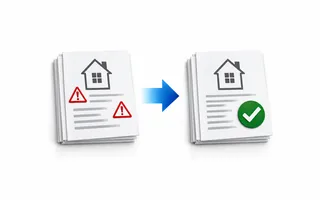
You can make your property's title marketable by taking proactive steps to correct outstanding title defects. Depending on the nature of the problem, this could include:
- Clearing Liens and Encumbrances: Outstanding liens, judgments, or delinquent taxes can usually be resolved by paying off the underlying debt and recording formal release documents with the county or municipality. Once this has been properly done, the cloud on the title's marketability is officially removed.
- Fixing Public Record Errors: Technical defects in the chain of ownership, like incorrect legal descriptions, missing signatures, or clerical mistakes, can typically be rectified by filing corrective deeds, affidavits of identity, or amended documents with the local recorder's office.
- Resolving Ownership Disputes: For situations involving competing ownership claims, negotiating directly with involved parties is usually the fastest way to resolve the issue. Obtaining signed quitclaim deeds or reaching formal settlements can legally eliminate outside interests and help establish clear ownership rights. In some cases, getting a newly located heir to sign a release is the final step needed to clear the title.
- Utilizing Court Action for Complex Defects: Serious title problems involving fraud, boundary disputes, missing heirs, unresolved ownership conflicts, or uncooperative claimants may require a quiet title action through the court system. If successful, the court will issue a conclusive ruling that legally establishes clear ownership and permanently erases the defect from the chain of title, making it fully marketable instead of merely insurable.
Frequently Asked Questions About Marketable vs Insurable Title
Can a Property Be Sold with an Insurable but Not Marketable Title?
Yes, provided the buyer contractually agrees to accept it. This is relatively common in commercial transactions involving distressed assets, redevelopment projects, or negotiated risk-sharing arrangements.
Do Lenders Require Marketable or Insurable Title?
Lenders typically require only an insurable title. As long as a reputable title insurance company is willing to issue a policy covering their mortgage interest, the lender will usually fund the loan.
Is Insurable Title Enough for Buyers?
It depends on the buyer's risk tolerance and long-term plans. Some buyers are comfortable accepting insured risks if the pricing reflects the issue, while others insist on fully marketable titles to avoid future complications during resale or refinancing.
What Risks Come with Accepting Insurable Title?
The primary risk is a lack of future liquidity. A future buyer, developer, or lender may reject the exact same title issues you chose to accept, regardless of your current insurance coverage. You may also face legal costs if a covered defect results in a claim, though title insurance covers those costs up to the policy amount.
How Do You Make a Title Marketable?
To make a title marketable, you need to correct the underlying issues. This may involve paying off and releasing active liens, correcting clerical record errors, resolving ownership disputes, recording missing documentation, or filing a quiet title lawsuit to get a conclusive order.
Does Title Insurance Guarantee a Marketable Title?
No. Title insurance protects against financial loss from covered defects, but it does not erase those defects or guarantee marketability. A property can have insurable title while still falling short of the marketable title standard.
Table of Contents
- Marketable vs. Insurable Title in Commercial Real Estate: What's the Difference?
- What Is a Marketable Title?
- What Is an Insurable Title?
- What's the Difference Between Marketable Title and Insurable Title?
- Why the Difference Matters in Commercial Real Estate
- Common Situations Where Title Is Insurable but Not Marketable
- How Buyers and Lenders Evaluate Title Risk
- How Title Insurance Plays a Role
- How to Resolve Title Issues to Make Title Marketable
- Frequently Asked Questions About Marketable vs Insurable Title