What Is a Preliminary Title Report and Why Does It Matter?

When you're buying or selling a home, the preliminary title report is one of the most critical documents you will receive. It summarizes what the title company found when reviewing the property's records and highlights any issues that need to be resolved before the sale can go through. You typically get the report sometime after signing the purchase agreement but before the transaction is finalized. While it may seem like a lot of technical jargon at first, it is actually a powerful tool for ensuring a smooth, surprise-free closing.
Table of Contents
- What Is a Preliminary Title Report and Why Does It Matter?
- What Is a Preliminary Title Report?
- What Information Is Included in a Preliminary Title Report?
- Preliminary Title Report vs Title Search vs Title Insurance
- Why a Preliminary Title Report Matters Before Closing
- Common Issues Found in a Preliminary Title Report
- What Happens After You Receive a Preliminary Title Report?
- How to Read a Preliminary Title Report
- Frequently Asked Questions About Preliminary Title Reports
What Is a Preliminary Title Report?

A preliminary title report is a document prepared by a title company after it reviews public records related to a property. It serves as a status report on the property's legal health and outlines the current status of its title, including who owns it, what is recorded against it, and what must be addressed before the transaction can close. Keep in mind that the preliminary report is not a final title insurance policy, and it does not guarantee that the title is clear.
Once a purchase agreement is signed, the buyer typically orders a title search (sellers may also order one). The title company then examines deeds, mortgages, liens, court judgments, tax records, and other public documents to prepare the report, which will act as a working document for clearing the property's title before title insurance is issued.
What Information Is Included in a Preliminary Title Report?
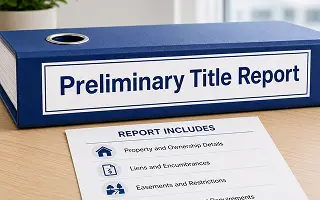
Preliminary title reports are typically organized into several key sections, each one covering a different aspect of the property's title.
Property and Ownership Details
This section of the report identifies the property itself and who legally owns it. It includes the property's legal description, parcel number, and the name of the current owner on record. This confirms who has the legal right to sell the property and that the description in the report matches what is being purchased.
For buyers, this is an important place to start. You want to be sure that the seller listed in your purchase agreement matches the owner listed in the report and that the property description is accurate. A mismatch here can indicate a clerical error that needs correction before closing.
For example, if the report indicates that the property is held in a trust or owned by multiple parties, additional documentation or signatures may be required before closing. Likewise, discrepancies between the property's legal description in the report and your purchase agreement could mean that you are buying a different parcel than you think.
Liens and Encumbrances
This section lists any financial claims or obligations attached to the property, such as outstanding mortgage balances, unpaid property taxes, contractor's liens, and court judgments.
Both buyers and sellers should pay close attention to this section. Liens and encumbrances stay with a property until they are resolved, meaning the property itself serves as collateral for the debt. If these issues are not cleared before closing, they can become the new owner's problem to deal with.
For example, if a previous owner failed to pay a contractor after completing renovations, the contractor may have filed a lien against the home. Even if the current seller did not create the issue, the lien still needs to be cleared before ownership can transfer cleanly. As a buyer, always ask questions about any listed items that you do not recognize and ensure they are handled before you take possession.
Easements and Restrictions
This part of the preliminary title report outlines any recorded rights that allow others to use part of the property for a specific purpose (easements) or any limitations tied to the property and what the owner can do with it (deed restrictions). These typically include utility easements, shared driveway agreements, and homeowners' association (HOA) rules.
For instance:
- A utility company may have the right to access a portion of your backyard to maintain power lines or underground pipes.
- A neighbor may have a shared driveway agreement that allows them to cross part of your property to reach their own.
- An HOA may have specific restrictions regarding building height, property use, or even the color of exterior changes.
Easements and restrictions do not necessarily stop a sale, but they can significantly affect how a buyer uses the property after the transaction is completed. Understanding these limitations before closing helps you decide whether the property still meets your needs.
Title Exceptions and Requirements
Exceptions are items that the title company will not cover under the final title insurance policy unless they are resolved. These are known risks that the company has identified and is choosing not to insure against in its current state. On the other hand, requirements are specific conditions that must be met before the title company will issue the final policy. These requirements may include paying off an existing mortgage, clearing a lien, correcting public record errors, or obtaining missing signatures from co-owners.
Exceptions and requirements are a crucial section of the preliminary report for both buyers and sellers to focus on. This section essentially outlines exactly what needs to happen next and directly affects whether and when the deal can close. Ignoring these details can lead to surprises on closing day.
Preliminary Title Report vs Title Search vs Title Insurance

While preliminary title reports, title searches, and title insurance are closely related, they each serve different purposes:
- A title search is the action. It is the process of reviewing public records to trace the property's ownership history and identify any issues. This involves digging through deeds, liens, court records, and tax documents, and it happens before the report is written.
- A preliminary title report is the output. It is a document that summarizes what the title search found and lists the property's current owner, as well as any liens, easements, restrictions, exceptions, or requirements that must be addressed before the sale.
- Title insurance is the safety net. It is a policy issued after closing that protects the buyer (and lender, where applicable) against problems that were not discovered during the search or that surface later.
In essence, the title search is the work, the preliminary report is the summary of that work, and the insurance is the protection for anything that may come up after identified issues have been cleared. They all work together to guarantee a secure real estate transaction, but they are not the same thing.
Why a Preliminary Title Report Matters Before Closing

Preliminary title reports are vital real estate documents and can make a significant difference in how smoothly a transaction goes. Here are a few reasons why you should get and carefully review one before closing on a property:
- Prevent Closing Delays: A preliminary title report helps identify title problems early, giving you enough time to resolve them before they threaten your closing date. For example, let's say a lien is discovered 40 - 50 days before closing. Everyone involved still has time to pay it off and obtain a release without undue pressure. The same lien discovered just a few days before closing can cause panic, delays, and even potentially lead to a canceled deal.
- Confirm Exactly What You Are Buying: The report helps buyers understand exactly what they are purchasing. It clearly shows the property's legal ownership, as well as any third-party rights or restrictions, like utility easements or HOA rules, tied to it. This prevents unwelcome surprises after you move in.
- Eliminate Financial Surprises: Reviewing the preliminary title report protects buyers from unexpected costs or legal complications. For example, discovering an unpaid tax lien after closing could leave the buyer responsible for resolving it. The report gives you the chance to identify these issues and ensure they are addressed while you still have the leverage to require the seller to pay.
- Empower Your Negotiations: The preliminary report gives buyers and sellers the details they need to make informed decisions on how to proceed with the transaction. If a major issue is found, it provides the evidence needed to renegotiate the price, request credits, or decide whether it makes sense to move forward with the transaction at all.
Common Issues Found in a Preliminary Title Report
Most preliminary title reports contain at least one issue, usually minor, but sometimes major. Here are some of the most common problems that show up:
- Liens and Unpaid Debts: These are the most frequent findings. Whether it's an outstanding mortgage balance that was never properly released, unpaid property taxes from a previous year, a contractor's lien from work done by a prior owner, or a court judgment against the seller, these debts must be cleared before closing.
- Ownership Disputes: These arise when multiple parties have a claim to the property or when a prior transfer was not properly documented. For example, an undisclosed heir or a co-owner who never signed a previous deed can create complications.
- Public Records Errors: Clerical errors in public records are also surprisingly common. A misspelled name or incorrect property description can create confusion about ownership and typically needs to be corrected before the sale proceeds.
- Easements or Deed Restrictions: These are recorded legal rights that limit how the property can be used. While not always a dealbreaker, they can affect a buyer's long-term plans for the property.
Any issues flagged in the preliminary title report need to be carefully reviewed and, in most cases, resolved before the transaction can move forward.
What Happens After You Receive a Preliminary Title Report?
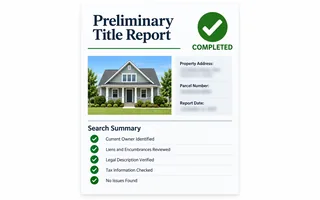
While receiving a preliminary title report means that the title search has been completed, it also marks the beginning of the next step in the transaction: review and resolution. Here is what you should do next:
- Review the Report: Read through each section carefully. Even if some parts seem technical, take the time to identify any items you do not understand, or that look unexpected. Pay special attention to the exceptions and requirements section.
- Ask Questions: Your real estate agent, attorney, or the title company can explain the details and help you understand what each item means. Do not assume that something is fine just because it is written in legal language that you don't understand.
- Resolve Identified Issues: Work with the appropriate parties to pay off liens, correct record errors, gather missing documents, or address any requirements listed in the exceptions section. The title company usually coordinates this process, but buyers and sellers may need to provide information or take specific actions. Keep in mind that sellers are typically responsible for clearing most issues, but the buyer should stay informed every step of the way.
- Move Toward Closing: Once all requirements are satisfied and issues are cleared, the title company can issue the final title insurance policy. At that point, the title is considered “clear”, and the transaction is ready to proceed to closing.
How to Read a Preliminary Title Report

You don't need to be a title expert to read a preliminary title report. Even though it may seem overwhelming at first, focusing on a few key areas makes it easier to understand the document:
- Start with the property and ownership section. Confirm that the seller listed in your real estate contract matches the current owner on record and that the property's legal description is correct. If the names or descriptions do not match, ask why immediately.
- Next, review the listed liens and encumbrances. These represent financial obligations tied to the property and are critical to resolve. Ask whether each lien will be paid off before closing and who is responsible for paying it.
- Pay close attention to the exceptions section. These are the items the title company will not cover and often signal areas that require action or further investigation before closing.
- Do not overlook the requirements. These are specific conditions that must be satisfied before the final title policy is issued. Missing even one requirement can delay or derail closing. Make sure every listed requirement is addressed before you sign the final closing documents.
Frequently Asked Questions About Preliminary Title Reports
Is a Preliminary Title Report the Same as Title Insurance?
No. A preliminary title report is a document that summarizes what the title company found during the title search. Title insurance is the policy issued after closing to protect against issues that were not uncovered by the search.
Who Prepares the Preliminary Title Report?
The title company prepares the preliminary report after completing a title search on the property.
How Long Does It Take to Get One?
A preliminary report is usually available within 2 to 10 business days after the title company receives the order. However, the exact timing depends on the complexity of the property's ownership history, the efficiency of the local recorder's office, and the title company's workload.
Can You Close Without a Preliminary Title Report?
In most cases, no. Lenders and buyers generally rely on the report to confirm ownership and identify issues that need to be resolved before closing.
What Should You Look for in the Report?
Focus on property and ownership details, liens, easements, and the exceptions and requirements sections. These areas tell you who owns the property, any financial obligations attached to it, how it may be used, and what needs to be resolved before closing. Flag anything you do not understand and ask questions.
What Happens If Issues Are Found?
Identified issues usually have to be resolved before the sale can proceed. This may involve paying off debts, correcting records, or obtaining additional documentation. If an issue cannot be resolved, closing may be delayed or canceled.
Table of Contents
- What Is a Preliminary Title Report and Why Does It Matter?
- What Is a Preliminary Title Report?
- What Information Is Included in a Preliminary Title Report?
- Preliminary Title Report vs Title Search vs Title Insurance
- Why a Preliminary Title Report Matters Before Closing
- Common Issues Found in a Preliminary Title Report
- What Happens After You Receive a Preliminary Title Report?
- How to Read a Preliminary Title Report
- Frequently Asked Questions About Preliminary Title Reports