What Problems a Title Search Can Reveal and How They Can Delay a Home Sale

A title search is one of the most important steps in any real estate transaction, but because it happens behind the scenes, most buyers and sellers don't think about it until something goes wrong. Title searches are specifically done to uncover issues that could delay or stop a sale from going through. Many of these problems are hidden in public records and only surface when a professional reviews the property's history. Thankfully, most can be resolved once they are identified, especially when caught early.
Table of Contents
- What Problems a Title Search Can Reveal and How They Can Delay a Home Sale
- What Is a Title Search and Why Does It Matter?
- Common Problems a Title Search Can Reveal
- How Title Issues Can Delay or Stop a Home Sale
- How to Fix Title Problems Before Closing
- How Long Does It Take to Resolve Title Issues?
- How to Avoid Title Problems Before Listing or Buying
- How Title Search Reports Help Prevent Delays
- Frequently Asked Questions About Title Search Problems
What Is a Title Search and Why Does It Matter?

Before we get into the types of problems a title search can uncover, it helps to actually understand what it is and why it is important.
A title search is a comprehensive review of public records to trace the property's full ownership history and identify anything that could affect its ownership rights. This isn't just a quick search. It involves a deep dive into historical deeds, mortgages, liens, court judgments, tax records, easements, and any other documents tied to the property. The primary purpose of the title search is to verify that the seller has the legal right to transfer ownership and that no one else has a competing claim.
Title searches also flag legal or financial issues attached to the property, such as unpaid liens, court judgments, or recording errors. These issues are typically referred to as “title defects” or “clouds”. If these defects are significant enough that a reasonable buyer would refuse the property, the title is considered unmarketable, and they must be resolved before the sale can move forward.
Common Problems a Title Search Can Reveal

A title search can uncover a wide range of issues, from unpaid debts to decades-old paperwork errors. Here are some of the most common problems a title search on a property can reveal:
Liens and Unpaid Debts
A lien is a legal claim placed on a property because of an unpaid debt. This could be from unpaid property taxes, outstanding mortgage balances, contractor (mechanic's) liens, homeowners' association dues, or court judgments. Liens are one of the most common title defects uncovered during a title search.
Real-world Scenario: A seller hired a contractor for a kitchen renovation but never paid the final bill, and so the contractor filed a mechanic's lien against the property. Now, when the seller tries to sell the home, the title search reveals that lien. The catch is that, even though the debt belongs to the seller, the lien stays attached to the home, meaning it must be paid off before the sale can close (if not, the buyer may become liable for the debt).
Ownership Disputes or Missing Heirs
Ownership disputes occur when multiple parties have a potential legal claim to a property. The current seller may believe they have full ownership, but the title search might reveal otherwise. Common examples of situations that often lead to ownership disputes include divorced spouses who were never properly removed from the deed, co-owners who did not sign off on a past sale, or heirs who were not notified of estate proceedings.
If someone with a legal interest in the property did not sign off on a past transfer, it can create a serious title problem, and the current seller may not have the legal authority to sell the property until all ownership claims are resolved.
Real-world Scenario: A property was left to three siblings when their parents died. Two siblings agreed to sell, but the third sibling was never located. The title search reveals that the missing sibling still has a legal interest in the property. The sellers cannot transfer full ownership without resolving that claim.
Errors in Public Records
Mistakes in public records are more common than most people realize. County and municipal recorder offices process millions of documents, and errors inevitably slip through. Common examples include misspelled names, incorrect property descriptions, missing signatures, and wrongly filed documents. While these types of title issues may seem minor, they create gaps in the chain of ownership and raise questions about the seller's legal authority to transfer the property, leading to delays in financing or even a complete halt of the transaction.
Fixing public record errors can be time-consuming and costly, and usually involves filing corrected documents with the appropriate recorder's office.
Real-world Scenario: When the current seller bought the property years ago, the county recorder misspelled their last name on the recorded deed. Now, since the name on the deed does not match the seller's legal name, the title search flags a break in the chain of ownership. Correcting this error requires filing paperwork with the county and can take weeks.
Fraud or Forged Documents
Title fraud happens when someone forges a signature, uses a false identity, or files a fraudulent deed to transfer ownership illegally. Because fraudulent documents are designed to look legitimate in public records, these types of issues are often the hardest to detect during a standard title search. This is the primary reason owner's title insurance is important: it provides a legal defense and covers financial losses if fraud is discovered after you've already closed on the home.
Real-world Scenario: A scammer uses AI to forge the signature of an out-of-state homeowner on a quitclaim deed, transferring the property to themselves. They then list the house for a “quick sale” price and try to sell it to an unsuspecting buyer. The title search might catch the forgery, or it might not. If the fraud is not discovered until after the sale, the real owner and the innocent buyer are caught in a legal battle.
Easements or Property Restrictions
An easement gives someone else the legal right to use part of a property, like utility companies running lines through a backyard or neighbors with right-of-way access. These easements stay with the property regardless of who owns it.
Easements that are not clearly disclosed or properly recorded can come as a surprise to buyers and significantly limit how the property can be used. Deed restrictions and restrictive covenants also have a similar impact: they may limit what you can build, how the property can be used, or even how it can be modified.
Real-world Scenario: A buyer plans to put a swimming pool in the backyard. After closing, they discover that the local electric company has an easement running through that exact spot. Because the utility company has the legal right to access that area for repairs, it can permanently block the buyer from building the pool.
Boundary or Survey Issues
Boundary issues arise when the recorded property lines don't match the physical reality on the ground. This usually happens when a prior survey was inaccurate, neighboring properties are subdivided without clean documentation, or fences are built in the wrong place. These title issues generally lead to disputes over what the buyer is actually purchasing and may require a new survey, negotiations with neighbors, or even legal action (in more complex cases) to resolve.
Real-world Scenario: A buyer purchases a home with a large side yard. After closing, a neighbor claims that the fence is actually a few feet onto their property. A new survey confirms the neighbor is correct. The buyer is now faced with a choice: either move the fence (and lose land they thought they owned) or enter a potentially expensive legal dispute with their new neighbor.
How Title Issues Can Delay or Stop a Home Sale

Discovering a title problem during a search can directly impact the transaction's timeline in several ways:
- Closing Delays: This is usually the most common outcome. The transaction cannot close until the issue is resolved, which often takes time. Even a minor clerical error can push your move-in date back by weeks while corrected documents are filed and recorded.
- The “Chain Reaction” Delay: Real estate deals rarely happen in a vacuum, and a single title problem can stall several other connected transactions. For instance, if your purchase is delayed by an ownership dispute, it may prevent your seller from buying their next home or prevent your current buyer from moving into your old house.
- Lender Refusal: Lenders are generally risk-averse. Most will not approve or fund a mortgage for a property with unresolved title defects. This can put the entire deal on hold until the problem is cleared.
- Insurance Complications: Even if a buyer is willing to take a risk on a property with a flagged title problem (like a boundary dispute or encroachment), a homeowners' insurance company might refuse to issue a policy on the property. This, in turn, can affect your ability to get a mortgage loan approved.
- Deal Collapse: In more serious cases, such as major ownership disputes or fraud, the transaction may fall through completely. Buyers may choose to walk away rather than take on the risk, especially if the possibility of resolving the issue is uncertain or could take months. Likewise, sellers may also decide to cancel the transaction and resolve the issue before relisting.
- Unexpected Legal and Holding Costs: Depending on the specifics, both parties may need legal assistance to resolve the problem, even for smaller issues. Beyond legal fees, delays can also lead to additional costs: buyers might have to pay for short-term housing or storage, while sellers might have to continue paying a mortgage, taxes, and utilities on a house they thought would be sold.
How to Fix Title Problems Before Closing

With the right steps and enough time, most title issues can be fixed. The solution largely depends on the type of problem, but the goal is always the same: clearing the title so that ownership can be cleanly transferred.
- Paying Off Liens or Debts: Settling what is owed so the lien can be released and removed from the title is usually the most straightforward way to fix a title problem. The seller typically pays this at or before closing, and a lien release is filed with the county or municipal recorder to officially remove the debt from the property's record.
- Correcting Public Record Errors: Errors in public records can usually be corrected by filing a corrective deed or other necessary documentation with the appropriate local office. Your title company or real estate attorney will usually handle this process on your behalf.
- Resolving Ownership Disputes: This is usually a bit more complex and may require contacting all parties involved, obtaining missing signatures, tracking down missing heirs, or working through probate if an estate is involved to establish clear ownership. In some cases, you may need legal assistance to ensure that the issue is properly resolved.
- Filing a Quiet Title Action: In complicated situations where ownership cannot be established through standard means, a “quiet title action” may be needed. This is a court proceeding used to establish clear ownership when records are unclear or disputed. A judge reviews the evidence and issues a ruling that legally settles who owns the property. This process can take months, but it is sometimes the only way to clear a complex title.
How Long Does It Take to Resolve Title Issues?

The timeline for resolving a title problem depends on the type and complexity of the issue. Relatively simple to moderate issues like unpaid liens or recording errors can usually be resolved within days to a few weeks at most, once the right steps are taken. However, more complex issues, like ownership disputes, missing heirs, or title fraud, can often take several months, as they typically involve multiple parties, legal filings, or court involvement.
Other factors that can also affect resolution timelines include:
- Third-Party Responsiveness: A title fix is only as fast as the slowest person involved. Delays from any involved party can prolong what is ordinarily supposed to be a quick fix.
- Governmental Backlogs: While many offices have gone digital, some smaller municipal recorder offices may still have manual backlogs that can add extra days to filing timelines.
- Court Availability: In situations where court hearings are required (like a quiet title action), you are at the mercy of the local court calendar, which varies significantly by county.
- Documentation Availability: How quickly you can provide necessary supporting documentation, like a divorce decree, a death certificate, or a previous title policy, directly dictates how fast necessary parties can work towards resolving the problem.
How to Avoid Title Problems Before Listing or Buying
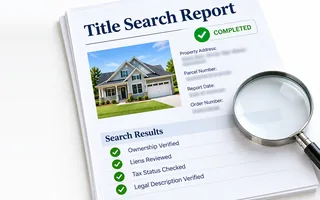
The best way to deal with title issues is to catch them early. By taking these proactive steps, you can save yourself significant time, money, and stress:
- Run a Pre-Listing Title Search: If you are a seller, don't wait for the buyer's title company to find a problem. Running a title search before listing helps you identify issues early, giving you time to resolve them without the pressure of an upcoming closing date. You can clear liens, correct errors, or address ownership disputes before a buyer is involved.
- Get a Title Search Report: As a buyer, you can request to see existing title search reports on a property or order one of your own before making a formal offer. This is especially valuable for distressed properties, foreclosures, or homes with complex ownership histories. Knowing about a title problem upfront helps you decide whether to make an offer at all.
- Periodically Review Property Records: As a property owner, you can also catch title issues before they grow by periodically reviewing your property records. Regularly check your local recorder's and assessor's websites for any new filings against your property. You can also use online property record tools to help you monitor recorded filings, ownership history, and any flags worth investigating further. These tools can provide a quick snapshot of your property's filing history, making them useful for ongoing monitoring. However, note that they are not a substitute for a full professional title search.
- Sign Up for Property Fraud Alerts: Many county recorder offices offer free property alert services where you receive an automatic notification (either via email or text) whenever a new document is recorded against your property. This is your first line of defense against title fraud and unauthorized liens.
How Title Search Reports Help Prevent Delays
Getting a title search report early in the process can make a huge difference. When issues are identified ahead of time, there is more flexibility to resolve them without delaying the transaction. A title search on property done 60 days before closing gives you 60 days to fix any uncovered issues. The same issues discovered three days before closing cause panic and delays.
Knowing about a title issue in advance also gives you time to negotiate how it will be handled. You can calmly discuss who pays for the fix, what timeline is acceptable, and whether the deal still makes sense. These conversations are much easier when there is no pressure to make a quick decision due to looming timelines. And if you are financing the purchase, a clean title search report gives both you and the lender confidence that the transaction can move forward smoothly.
Frequently Asked Questions About Title Search Problems
What Is the Most Common Issue Found in a Title Search?
Liens from unpaid property taxes, contractor bills, outstanding mortgage balances, and court judgments are the most common problems found in a title search. Most of these liens can be resolved by paying off the debt.
Can a Title Issue Stop a Home Sale?
Yes. If a serious title problem, like fraud or ownership disputes, cannot be resolved before closing, the sale may be delayed indefinitely or canceled entirely. Lenders will not typically approve a loan for a property with unresolved title problems, and in some cases, the buyer or seller may choose to walk away.
How Do You Fix a Title Problem?
It depends on the problem. Fixes may involve paying off a lien, correcting a record error, or resolving an ownership dispute, with more complex issues often requiring legal action. A title company or real estate attorney can advise on the best approach for your specific issue.
How Long Does a Title Search Take?
A standard title search typically takes anywhere from 2 to 10 business days. However, this timeframe may extend to a few weeks or more for situations involving older properties, complex ownership histories, or counties with slow public record systems.
Who Is Responsible for Fixing Title Issues?
The seller is usually responsible for resolving title issues before closing. However, buyers and sellers can negotiate who pays for fixes in the purchase agreement.
Can You Sell a House with a Title Issue?
Technically, yes, but it is difficult. Most buyers and lenders require a clear title before completing the transaction. Even if you find someone willing to take on the risk, you would likely sell at a significant discount.
Table of Contents
- What Problems a Title Search Can Reveal and How They Can Delay a Home Sale
- What Is a Title Search and Why Does It Matter?
- Common Problems a Title Search Can Reveal
- How Title Issues Can Delay or Stop a Home Sale
- How to Fix Title Problems Before Closing
- How Long Does It Take to Resolve Title Issues?
- How to Avoid Title Problems Before Listing or Buying
- How Title Search Reports Help Prevent Delays
- Frequently Asked Questions About Title Search Problems