Title Opinion: What It Is, What It Includes, and When You Need It

A title opinion is a legal document used in real estate transactions to evaluate whether a property's ownership history is valid and transferable. You will most likely encounter it in “attorney states” (areas where legal counsel is required to handle real estate closings), complex commercial transactions, or cash purchases where a traditional mortgage lender is not present to insist on title insurance. While many people are familiar with title insurance, most have never heard of a title opinion or incorrectly assume the two are interchangeable. However, a title opinion is a legal assessment about the validity of the title, while title insurance provides financial protection. This distinction is crucial for managing transaction risk.
Table of Contents
- Title Opinion: What It Is, What It Includes, and When You Need It
- What Is a Title Opinion?
- What Does a Title Opinion Include?
- What's the Difference Between a Title Opinion and Title Insurance?
- When Do You Need a Title Opinion?
- Why a Title Opinion Matters Before Closing
- How a Title Opinion Is Prepared
- How Much Does a Title Opinion Cost?
- What's the Difference Between a Title Opinion and a Title Search Report?
- Frequently Asked Questions About Title Opinions
What Is a Title Opinion?

A title opinion (sometimes referred to as an “attorney opinion of title”) is a written legal assessment prepared by a licensed real estate attorney after reviewing a property's public record history. The attorney thoroughly analyzes the property's chain of title, examining deeds, mortgages, liens, court filings, tax records, easements, and other necessary records to understand the full picture of the property's title and identify any defects or risks. They then give a professional legal conclusion about whether the title is valid, clear, and transferable (based on the review).
It is important to note that, unlike a title insurance policy, a title opinion is not an insurance product. The attorney simply provides their legal opinion based on the records reviewed, but they do not guarantee that no future title issue will arise. Title opinions are standard practice in attorney states, cash purchases, refinancing transactions, and commercial real estate deals where the involved parties want a legal evaluation of the property's ownership status before proceeding. Depending on the region and local customs, an attorney title of opinion can also serve as an alternative for buyers who choose not to purchase traditional title insurance.
What Does a Title Opinion Include?
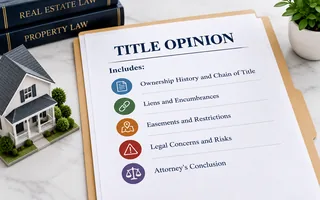
A title opinion covers several core areas related to the property's ownership and legal status. While specific formats vary by attorney and state, the document will generally contain the following essential components:
- Ownership History and Chain of Title: The attorney reviews every recorded transfer of ownership tied to the property. This process traces the chain of title from the earliest available record to the present day to confirm whether the chain is complete and unbroken. Missing deeds, unexplained ownership gaps, or questionable transfers are flagged and noted in the opinion, as they affect the seller's ability to convey a clean title.
- Liens and Encumbrances: The opinion identifies any active financial claims recorded against the property, such as existing mortgages, property tax liens, contractor liens, and court judgments. The attorney evaluates the legal priority of these liens and assesses exactly which items must be resolved before the title can transfer.
- Easements and Restrictions: The attorney reviews and notes any recorded easements, covenants, and deed restrictions that could affect the buyer's intended use for the property.
- Legal Concerns and Risks: The attorney flags and evaluates any irregularities in the public records that raise potential legal concerns about ownership, validity of a transfer, or the ability to convey a clear title. This might include subtle name discrepancies, improperly executed deeds, potential claims from missing heirs, or unresolved probate matters.
- Attorney's Conclusion: The title opinion concludes with the attorney's professional assessment of the title. This section is critical, as it explicitly states whether the attorney believes the title is marketable, insurable only, subject to specific curative actions before closing, or entirely unmarketable. If defects are found, the conclusion will typically provide a roadmap of the exact steps required to clear the clouds and cure the title.
What's the Difference Between a Title Opinion and Title Insurance?
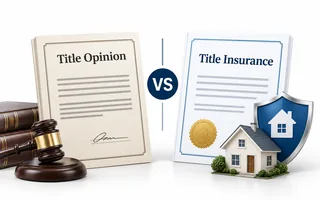
A title opinion and title insurance are closely related, which can be a common point of confusion for many buyers. However, they serve very different purposes, and understanding the difference is critical to deciding which to rely on:
- Title Opinion: This is a legal analysis that reflects an attorney's professional judgment of a property after reviewing public records tied to it. The attorney outlines their findings and gives a formal opinion on whether the title is legally valid. However, a title opinion does not provide financial coverage if a defect causes a loss. If the attorney missed something during the review, the buyer may have legal recourse against them (typically through a professional malpractice claim), but there is no insurance policy compensating for the loss.
- Title Insurance: This represents direct financial protection. A title insurance policy protects buyers and lenders against actual financial losses caused by covered title defects, including undiscovered problems during the title search. The insurance company pays out covered claims and handles legal defense costs up to the limits of the policy.
Here's a quick side-by-side comparison of both:
|
Feature
|
Title Opinion
|
Title Insurance
|
|---|---|---|
|
What It Is
|
A legal analysis and professional assessment | A contract of financial indemnification |
|
Primary Function
|
Establishes the legal validity of the current title | Reimburses the policyholder if a covered defect causes a financial loss |
|
Provider
|
A licensed real estate attorney | A title insurance company |
|
Financial Backing
|
None (recourse is limited to attorney malpractice liability) | Full financial coverage up to the stated policy amount |
Keep in mind that, while both title opinions and insurance help secure real estate transactions, one cannot generally replace the other. Most mortgage lenders require title insurance regardless of whether a title opinion has been prepared because they want financial protection for their loan collateral, which the opinion cannot provide.
In some situations, a title opinion may serve as the primary form of title review, especially in attorney states where legal counsel oversees closings and reviews title matters directly or for straight cash purchases. However, even in these situations, pairing a title insurance policy alongside the attorney's opinion of title is highly recommended. Without it, you (as the buyer) would ultimately be accepting greater financial risk if an undiscovered, hidden title defect appears down the line.
When Do You Need a Title Opinion?
A title opinion is not required for every real estate transaction, but there are certain specific situations where it is standard practice or strongly recommended:
- Attorney Closing States: In states where a real estate attorney is required to be involved in the closing (such as New York, Georgia, Massachusetts, Connecticut, South Carolina, and Delaware), the attorney typically prepares a title opinion as part of their services. The opinion helps confirm that the seller can legally transfer ownership and that major title defects have been identified before closing.
- Cash Purchases: Because cash buyers are not bound by institutional lender mandates, they are not contractually mandated to purchase title insurance. As a result, some buyers may choose to rely on a title opinion to evaluate the property's risk profile before proceeding with the purchase. While title insurance is still available and highly recommended, some investors opt for a title opinion alone to save on closing costs. However, it is important to remember that, even though the opinion identifies known risks, it does not provide the financial protection against hidden defects that title insurance offers.
- Streamlined Refinancing: Some lenders may accept a title opinion instead of requiring a full, new title insurance process as part of a streamlined refinance process, particularly when the property was recently purchased, and the title history is well-established. However, this largely depends on investor guidelines and state regulations; many conventional refinances still require a fresh lender's title insurance policy.
- Commercial Real Estate Transactions: Title opinions are common in commercial real estate, especially for complex deals involving layered corporate ownership structures, multi-parcel assemblages, or properties with long or complicated histories. Commercial buyers and lenders typically require a detailed legal assessment from an experienced real estate attorney to supplement their title insurance coverage.
Why a Title Opinion Matters Before Closing

Title opinions are more than just another legal formality; they add crucial value to real estate transactions by giving buyers, sellers, and lenders a legal evaluation of a property's ownership status before money changes hands. Even when title insurance is also being purchased, obtaining an attorney's opinion of title before closing offers certain advantages, such as:
- Identifying Risks Early: A title opinion uncovers and evaluates complex ownership disputes, prioritized liens, archival recording errors, and other legal concerns before the transaction closes. A seasoned real estate attorney can often flag the severe legal consequences of issues that a standard title report might merely list or underemphasize, giving involved parties enough time to resolve the issues instead of dealing with surprises after the transaction is complete.
- Supporting Informed Decision-Making: Title opinions help buyers determine whether a property presents an acceptable risk. Depending on the attorney's assessment and the specific liabilities outlined in their conclusion, buyers can either choose to proceed with the transaction, renegotiate terms, request that issues be resolved, or walk away from the deal.
- Confirming Title Marketability: If the attorney concludes the title is “marketable”, it gives the buyer confidence that ownership can transfer cleanly and without significant legal uncertainty. This is crucial for future sales, refinancing, and financing approvals, all of which depend on the strength of the title. For cash buyers relying solely on a title opinion, this “marketable title” conclusion is the primary assurance they have.
How a Title Opinion Is Prepared
Attorneys typically follow a methodical and thorough process when preparing title opinions. This usually involves the following steps:
- Collecting Property Records: The attorney begins by gathering all recorded public documents tied to the property, including deeds, mortgages, liens, court filings, tax records, and easements. These documents are typically obtained from local recording offices; in areas with digitized record databases, this can usually be done relatively quickly, while in other areas, it may require manual archive searches that extend the overall timeline.
- Tracing Ownership History: Next, the attorney meticulously reviews the chain of title chronologically, verifying that each transfer from one owner to the next is properly documented and that the chain is unbroken. Each link in the title chain is examined for consistency in names, property descriptions, and documentation to identify any missing transfers, improperly executed deeds, recording errors, or ownership gaps.
- Identifying and Analyzing Potential Legal Issues: Any defects, inconsistencies, or legal concerns identified during the review are analyzed and documented. The attorney assesses how serious each issue is and whether corrective action is needed before closing. Some issues may be deemed minor and can be noted without action, while others are considered severe and require resolution (recording a lien release, filing additional documentation, filing a quiet title action, etc.).
- Preparing the Formal Written Opinion: Lastly, the attorney compiles their findings into a structured, written document. This report summarizes the property's ownership history, outlines and categorizes any existing liens or encumbrances (including easements and restrictions), and details legal concerns. It will also state the attorney's overall professional conclusion about whether the title is legally valid and marketable. The opinion will be addressed to the client (the buyer, seller, or lender who retained the attorney) and is typically delivered within a few days after the title search is completed.
How Much Does a Title Opinion Cost?

A title opinion can cost anywhere from $200 to $1,500 or more. Actual costs are influenced by several factors, including location, property type, the complexity of the transaction, the attorney's experience, and prevailing local market rates. For instance, a straightforward residential title opinion will typically cost less than those involving complex commercial properties, multiple parcels, estate transfers, or complicated ownership histories.
In traditional attorney states, the title opinion fee is usually bundled directly into the attorney's closing fees and appears as a distinct line item on the final closing disclosure or settlement statement rather than as a separate, standalone charge.
Also, in many real estate markets, an attorney's title of opinion typically costs less than a full owner's title insurance premium (which is usually calculated as a percentage of the property's total purchase price). This cost difference makes it an appealing option for cash buyers or in markets where opinions are the standard practice. However, it is important to remember that this lower upfront cost reflects the lack of financial coverage; the buyer is trading a lower closing expense for higher long-term risk.
What's the Difference Between a Title Opinion and a Title Search Report?

While a title search report and a title opinion are closely intertwined, they serve different core purposes in real estate transactions:
- A title search report is an objective, factual summarization of what was uncovered during a search of public records (deeds, liens, recorded claims, easements, encumbrances, etc.) tied to a property. This document serves as a presentation of the raw data gathered during the search process, without offering any legal conclusions or risk assessments.
- A title opinion is a formal legal interpretation and analysis of the information contained in the title search report. It is prepared by a licensed real estate attorney who reviews the title search findings (or conducts their own search) and provides a professional assessment of the title's legal validity and any risks it presents. This document answers legal questions like “Is the historical chain complete?” “Does an unreleased mortgage still carry legal priority?” and “Can the current seller convey a clear, marketable title?”
Both documents are typically used together in most real estate deals and work in tandem to protect the transaction: the title search report provides raw data, while the title opinion provides the expert legal analysis required to interpret that data.
Frequently Asked Questions About Title Opinions
Is a Title Opinion Required?
This generally depends on location, lender requirements, and the type of transaction. In attorney states, a title opinion is typically required as part of the closing process. An attorney title of opinion is also standard practice for complex commercial deals, while standard residential closings typically rely more heavily on title insurance.
Who Prepares a Title Opinion?
Title opinions are prepared exclusively by licensed real estate attorneys. They analyze the legal status of a property's title and provide a written conclusion about its validity. Keep in mind that the attorney must be actively licensed to practice in the state where the property is located.
Is a Title Opinion Enough Without Title Insurance?
A title opinion may be legally sufficient for straightforward cash purchases or in attorney states where opinions are standard. However, because it does not provide financial protection if a hidden defect later causes losses, most real estate professionals recommend purchasing owner's title insurance even when an attorney opinion of title is provided.
How Long Does It Take to Get a Title Opinion?
The overall timeline depends on the complexity of the property and the availability of local records. Straightforward residential properties typically take around 3 to 10 business days, while complex properties with tangled ownership histories or complicated title defects can take 2 to 3 weeks or longer.
What Is the Difference Between a Title Opinion and a Title Report?
A title report (or title search report) is an objective compilation of the information found in a property's public records during a title search. A title opinion is an attorney's legal analysis and interpretation of that information and their professional assessment of whether the title is valid, clear, and transferable.
Do Lenders Accept Title Opinions?
Some lenders may accept title opinions in certain situations, particularly for low-risk or streamlined refinancing transactions. However, most mortgage lenders still require title insurance because it provides financial protection for the loan if a title defect later surfaces.
Table of Contents
- Title Opinion: What It Is, What It Includes, and When You Need It
- What Is a Title Opinion?
- What Does a Title Opinion Include?
- What's the Difference Between a Title Opinion and Title Insurance?
- When Do You Need a Title Opinion?
- Why a Title Opinion Matters Before Closing
- How a Title Opinion Is Prepared
- How Much Does a Title Opinion Cost?
- What's the Difference Between a Title Opinion and a Title Search Report?
- Frequently Asked Questions About Title Opinions